

The Ford Ranger is one of the most popular mid-size trucks for EV conversion. Its body-on-frame construction, large engine bay, and robust drivetrain make it a strong candidate for electrification. The key to a successful build is matching the motor to the Ranger's weight, towing requirements, and intended use. This guide maps CMVTE's motor options to the Ranger platform.
Ranger Performance Requirements
A Ford Ranger (1998-2012 models are the most common conversion donors) weighs approximately 1,600-1,900 kg unladen and can tow up to 3,000 kg. The original 2.3L four-cylinder or 3.0L/4.0L V6 engines produce between 140-210 hp and 200-350 Nm of torque. An EV motor should match or exceed these figures, particularly the low-end torque that matters for towing and off-road driving.
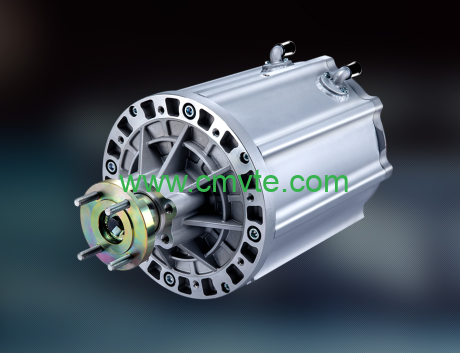
CMVTE Motor Options
| Motor | Power | Torque | Cooling | Best For |
| CVx 80 | 80 kW (107 hp) | 200 Nm | Air | 2WD city driving, light duty |
| CVx 120 | 120 kW (161 hp) | 280 Nm | Liquid | Daily driving, occasional towing |
| CVx 160 | 160 kW (215 hp) | 380 Nm | Liquid | Towing, off-road, heavy use |
For most Ranger owners, the CVx 120 or CVx 160 is the right choice. The CVx 160 delivers 380 Nm from 0 RPM — exceeding the torque output of the 4.0L Cologne V6 while drawing less current at cruising speed. The liquid cooling system handles sustained loads during towing or off-road climbs without thermal derating.
Drivetrain Configuration
The Ranger's live rear axle and manual or automatic transmission can be retained in three configurations:
- Motor to original transmission: The CVx motor bolts to the Ford M5OD or 5R55E bellhousing via a CMVTE adapter plate. The clutch pedal operates the motor's neutral state. This is the simplest and most cost-effective approach.
- Motor direct to transfer case: For 4WD Rangers, the motor can couple directly to the transfer case input, eliminating the main transmission. The transfer case provides high and low range gearing.
- Direct drive to differential: The motor mounts to the rear axle housing and drives the differential directly through a CV joint. This frees up the engine bay entirely for batteries but requires custom fabrication.
Battery Configuration
The Ranger's long wheelbase and ladder frame provide generous battery space:
- Engine bay: 10-20 kWh LFP pack in the space of the removed engine, radiator, and accessories.
- Under the bed (between frame rails): 20-40 kWh — the ideal location. The Ranger's frame rails are 850-900 mm apart, providing space for a wide, flat pack. CMVTE's frame-mounted tray bolts to the existing crossmember holes.
- Fuel tank area (under the cab, behind the rear axle): 10-15 kWh space freed by removing the fuel tank.
A combined 50-70 kWh pack provides 200-300 km range. The under-bed location keeps the centre of gravity low, improving stability when towing.
Key Considerations for Ranger Builds
- Towing: The CVx 160's 380 Nm at 0 RPM provides more than enough torque for towing. Configure the controller torque management to limit peak output when towing to protect the driveline.
- 4WD retention:The Ranger's BorgWarner 1354 transfer case can be retained. The CMVTE controller sends speed and torque signals compatible with the transfer case's electronic shift module.
- Power steering: The Ranger's hydraulic power steering pump must be replaced with an electric power steering (EPS) unit. CMVTE supplies EPS kits for the Ranger.
- Brake booster: A 12V electric vacuum pump is required for brake assist, as the engine-driven vacuum source is removed.
Controller Integration & Gauge Compatibility
CMVTE's CAN controller outputs standard signals compatible with the Ranger's instrument cluster. Speedometer signal, temperature gauge, and check-engine light can all be adapted. The controller also manages contactor pre-charge, regen braking (adjustable 10-70%), and throttle mapping through a software interface. A pre-configured tune for the Ranger platform is loaded at the factory, reducing tuning time to less than an hour.
Conversion Process Summary
- Remove the engine, transmission (if direct-drive is chosen), radiator, exhaust, fuel tank, and accessory belt systems.
- Mount the CVx motor to the transmission or adapter plate. For 4WD, retain the transfer case and driveshafts.
- Install the under-bed battery pack using CMVTE's frame-mounted tray. Route HV cables through the frame rail channels using the supplied conduit.
- Mount the controller in the engine bay or under the cab. Install the EPS pump, vacuum pump, and DC-DC converter.
- Connect the wiring harness, configure the controller, and perform insulation resistance testing before the first drive.
Cost Breakdown
| Build Level | Kit | Battery | Total |
| Basic (2WD, city) | CVx 80 — $3,500 | 30 kWh — $4,500 | $9,000-$11,000 |
| Mid (daily + towing) | CVx 120 — $5,500 | 50 kWh — $7,000 | $14,000-$17,000 |
| High-perf (4WD, off-road) | CVx 160 — $7,500 | 70 kWh — $10,000 | $19,000-$23,000 |
CMVTE Advantage
CMVTE supplies conversion kits to 130+ countries and has specific experience with Ford Ranger builds. Every kit includes the motor, controller, adapter plate, wiring harness, cooling system components, and installation documentation. Dr. Kevin Wang's engineering team provides remote support during your build.
Get a Ranger Conversion Quote →
Tell us your Ranger model (2WD or 4WD) and target range — we will recommend the right motor, battery, and adapter configuration


