

Removing the gas engine from your Toyota Pickup (Hilux, Tacoma, or older pickup) cuts off the vacuum supply to your brake booster. Without a fix, the brake pedal goes rock-hard — unsafe on the road and illegal in most jurisdictions. A 12V electric vacuum pump solves this. Here's how to install one correctly in 5 steps.
What You Need
| Component | CMVTE Part | Spec |
|---|---|---|
| Vacuum Pump | 12V Electronic Vacuum Pump | 28 L/min flow, 28 inHg max, IP65 |
| Reservoir | 2L Steel Vacuum Tank | Powder-coated, 3/8" barb fittings |
| Pressure Switch | Adjustable Vacuum Switch | On at 18 inHg, off at 23 inHg |
| Check Valve | Inline check valve | Prevents vacuum loss when pump is off |
| Hose Kit | 3/8" vacuum-rated hose + clamps | High-temp silicone, 1 meter |
| Wiring | 40A relay + fuse holder + 12 AWG wire | Dedicated circuit, ignition-switched |
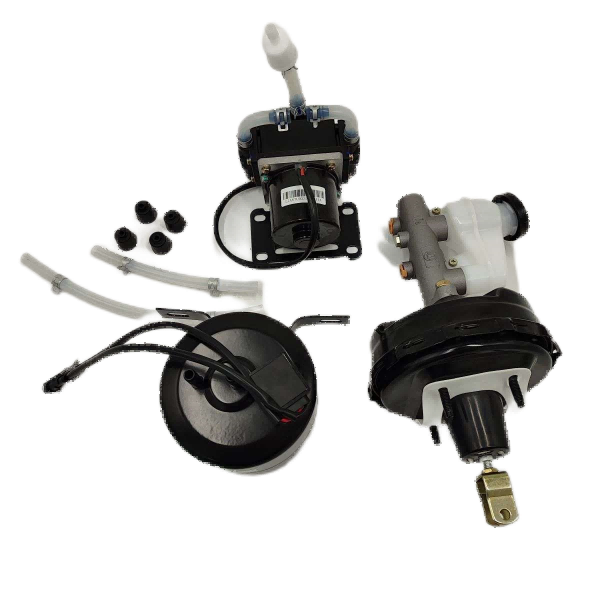
Step 1: Remove the Old Engine and Assess the Booster
With the engine out, check your factory brake booster. If it's in good condition (no rust, no leaks, the diaphragm holds vacuum), you can reuse it. If it's old or damaged, replace it now — a leaking booster will defeat your new pump system.
Toyota Pickup tip: The booster is held by 4 nuts on the firewall inside the cabin. You'll need a deep socket and an extension to reach them behind the pedal assembly.
Step 2: Mount the Pump and Reservoir
Find a location in the engine bay that is:
- Below the brake booster — so vacuum lines run uphill to the booster (condensation drains back to the pump)
- Away from exhaust or motor heat — pump electronics don't like sustained heat above 85°C
- Accessible for service — you'll need to check the pump filter annually
Toyota Pickup mounting spots:
- Tacoma/Hilux: Inner fender well, driver side (near original airbox location)
- Older Pickup: Core support between radiator and grille
- Use anti-vibration rubber mounts — the pump vibrates and will rattle against metal brackets
Step 3: Plumb the Vacuum Lines
- Pump outlet → Check valve — the check valve must point AWAY from the pump (arrow stamped on the valve body)
- Check valve → Reservoir — keep this run as short as possible, 30 cm max
- Reservoir → Brake booster — use the original vacuum hose port on the booster; if it's the wrong size, use a reducing coupler
All connections must be clamped. A loose hose clamp is the #1 cause of vacuum leaks in converted pickups.
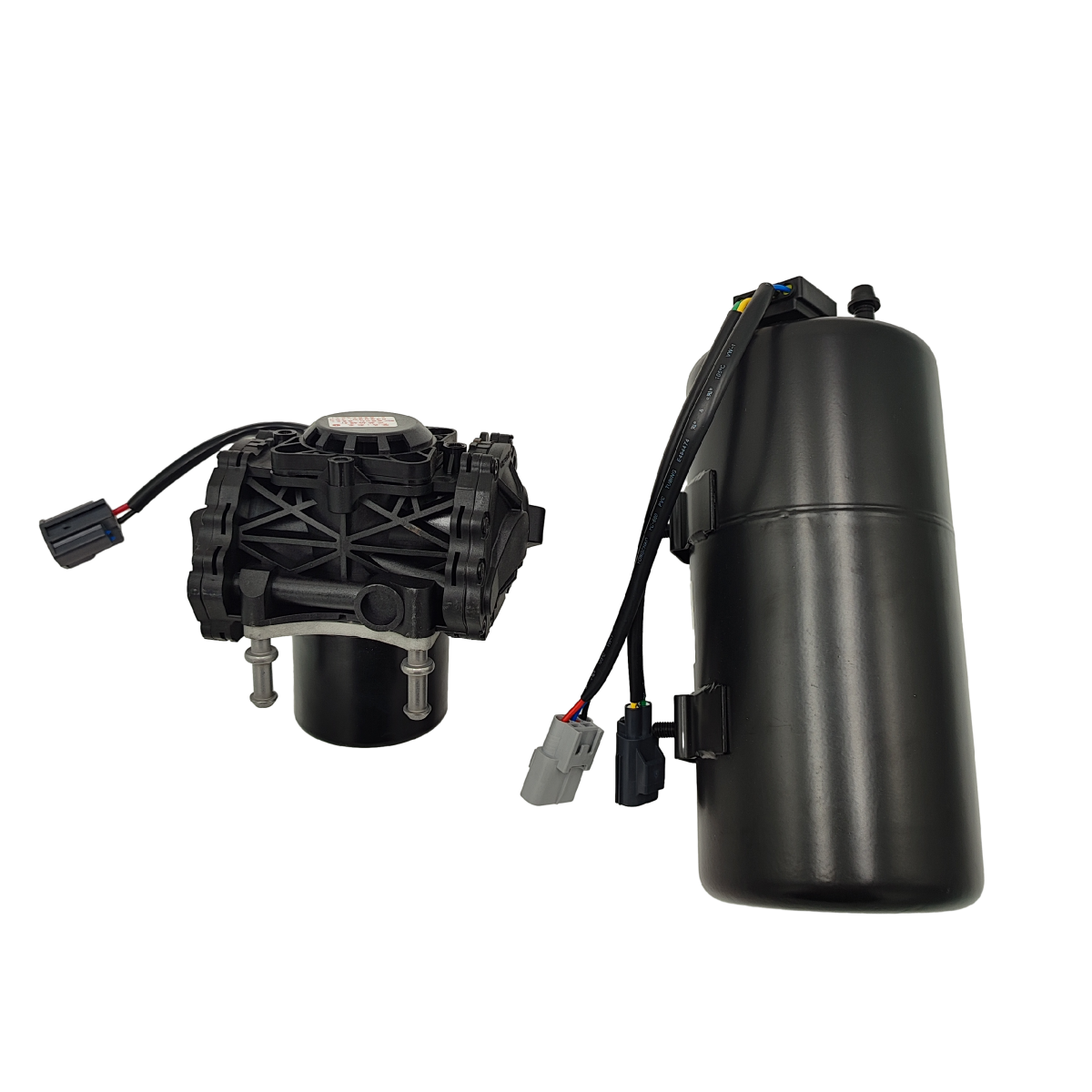
Step 4: Wire the System
| Wire | Connection | Notes |
|---|---|---|
| Pump positive (red) | 40A relay output (87) | Use 12 AWG minimum |
| Pump negative (black) | Chassis ground, clean metal | Sand the paint off for a good connection |
| Relay coil positive (86) | Ignition-switched 12V | From your key-on power source (not constant battery) |
| Relay coil negative (85) | Pressure switch | Switch opens at 23 inHg, closes at 18 inHg |
| Pressure switch other wire | Ground | Completes the circuit to cycle the pump |
| Battery positive | 40A fuse → relay input (30) | Fuse within 30 cm of battery |
How it works: When vacuum drops below 18 inHg, the pressure switch closes → relay activates → pump runs until vacuum reaches 23 inHg → switch opens → pump stops. The reservoir holds enough vacuum for 3-5 brake applications between pump cycles.
Step 5: Test for Leaks
- Turn key to ON (engine doesn't need to run)
- The pump should run for 10-30 seconds, then stop
- Pump the brake pedal 5-6 times with the key still ON
- If the pump restarts, the system is working — it's replacing the vacuum you used
- Pressure test: With engine OFF and system at full vacuum, the vacuum gauge should hold above 20 inHg for 24 hours. If it drops faster, you have a leak — check hoses, check valve direction, and booster diaphragm

Common Toyota Pickup Mistakes
- Mounting the pump too high — condensation runs down into the pump and kills it. Mount below the booster level.
- Skipping the check valve — without it, vacuum bleeds back through the pump when it's off, and you lose brake assist.
- Sharing the pump circuit — the pump draws 15-20A inrush. Sharing a circuit with your BMS or controller causes voltage drop that can trip errors.
- Forgetting a vacuum gauge — you can't diagnose a failing pump or a leak without one. Install a panel-mount gauge in the cabin.
Need a Complete Kit?
CMVTE offers a Toyota Pickup vacuum brake kit with all components pre-tested and matched. Comes with wiring diagram and installation video support.
WhatsApp / Phone: +86 181 2358 8272
Email: [email protected]
Mention "Pickup Brake" for a complete kit quote and installation guide.

