

Converting a car to electric is an exciting project, and choosing the right motor is like picking a powerful "heart" for your vehicle. There is no single "best" motor – only the one that best fits your needs. This guide walks you through the entire decision process, helping you answer how do I choose the most efficient power modules for EV drivetrains?
Before looking at any motor specifications, ask yourself these three questions:
⚡ Performance or range?
- Performance beast: Extreme acceleration and high top speed? (e.g., 0-100 km/h under 4 seconds, top speed >160 km/h)
- Range king: Maximum range per charge? (e.g., >400 km)
- Balanced: Ideal compromise for daily driving with occasional excitement.
💰 What is your budget?
Motor prices vary dramatically. High‑performance motors require expensive batteries, controllers, and charging systems – total cost escalates quickly. Set a clear overall budget.
🚗 Vehicle usage?
- Track days / drag racing: Extreme performance, ignore range and sustained cooling.
- Daily street driving: Smooth, quiet, reliable, good range.
- Off‑road: Strong low‑end torque and durable motor.
Clearly define your answers – they will be the foundation of every subsequent choice.
Step 2: Understand key motor parameters
Determines top speed and acceleration. More power = higher top speed and faster acceleration. 1 hp ≈ 0.75 kW.
Determines tractive effort and climbing ability. More torque = stronger launch, better hill climbing. EVs deliver max torque from zero RPM.
System operating voltage. Higher voltage (400V/800V) allows more power at same current, reduces losses – but demands higher‑grade components.
Peak power is short‑term (e.g. 30 sec). Rated power is continuous – represents true thermal capability.
Electrical to mechanical conversion efficiency. Higher efficiency = more range, less heat. Typically 90‑97%. The most efficient power modules for EV drivetrains often exceed 95%.
Step 3: Explore main motor types – pros & cons
1. Permanent Magnet Synchronous Motor (PMSM)
Pros: Extremely high efficiency (king of energy conversion at mid/low speeds), high power density (small & light), excellent speed control.
Cons: Higher cost (rare‑earth magnets), demagnetisation risk at very high RPM (needs good cooling).
Best for: Maximum range, daily driving, quiet & smooth experience. Preferred by most modern EVs (Tesla, BYD).
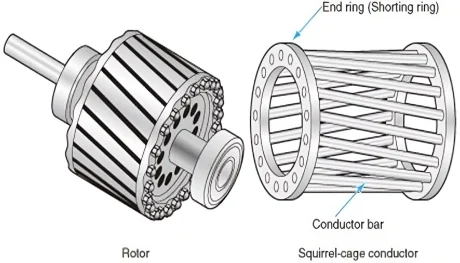
2. AC Induction Motor (Asynchronous)
Pros: Lower cost, rugged and durable, excellent sustained high power (heat tolerant), no demagnetisation risk.
Cons: Slightly lower efficiency (especially at low load), larger & heavier, needs external inverter excitation (some standby loss).
Best for: Track/performance builds, budget‑conscious high power enthusiasts (early Tesla Model S Performance).
3. Hub Motor
Pros: Extremely simple mechanical design (no transmission, driveshaft, differential), saves space, enables torque vectoring.
Cons: High unsprung mass – ruins suspension, handling, comfort; cooling & sealing are major challenges; difficult maintenance.
Best for: Classic/show cars, low‑performance projects, experimental concepts.
Step 4: Decision flow & practical matching
Now integrate all the information into a clear decision process:
Work backwards from your goal:
- ✔ Goal A: Prioritise range/efficiency → First choice: PMSM. Then select power level (e.g., ~150 kW for 0-100 km/h in ~6 sec). This is the classic best motor for electric car conversion answer.
- ✔ Goal B: Extreme performance / track racing → First choice: AC induction motor. Choose high peak power (300 kW+) with excellent continuous rating.
- ✔ Goal C: Low cost, simple entry conversion → Consider AC induction motor or used PMSM. Hub motors seem mechanically simple but good ones are expensive – evaluate carefully.
Consider drivetrain layout (RWD / FWD / AWD):
- Rear‑wheel drive: Classic balanced layout. Motor placed ahead of rear axle – good weight distribution, fun to drive.
- Front‑wheel drive: Less common, usually for simple replacement of transverse engine platforms.
- All‑wheel drive: Ultimate performance. Two motors (front+rear) – incredible traction and acceleration. Highest cost and complexity.
Match the "holy trinity" (battery, controller, motor):
- Voltage must match: Motor, battery, and controller rated voltage must be identical.
- Leave power margin: Controller continuous current must meet motor’s peak demand. Battery discharge capability (C‑rate) must satisfy both. Common mistake: powerful motor with weak battery – performance never realised.
Summary & final recommendations
| Your priority | Recommended motor type | Reason |
|---|---|---|
| Long range, daily commute, quiet & smooth | Permanent Magnet Synchronous Motor (PMSM) | Highest efficiency, mature technology, meets most daily needs. |
| Violent acceleration, track days, high power on a budget | AC Induction Motor | Rugged, heat‑tolerant, great for sustained high loads, cost advantage. |
| Show car, low‑difficulty conversion, unique layout | Hub Motor | Simplest mechanical design, enables layouts impossible with traditional motors – but sacrifices handling. |
| Ultimate performance, all‑terrain, unlimited budget | Dual‑motor AWD (PMSM + induction combo) | Combines best of both (front PMSM efficient, rear induction powerful) – e.g. Tesla Plaid. |
Final critical reminders
- ✔ Cooling is key: Even the best motor will overheat. Ensure your conversion includes an efficient cooling system (liquid cooling is best).
- ✔ Seek professional help: Unless you are an experienced hobbyist, strongly advise consulting or hiring a professional EV conversion shop. Motor and high‑voltage installation involves personal safety.
- ✔ Follow regulations: Understand your local vehicle modification laws to ensure your conversion is legal and compliant.
Wishing you a successful conversion – enjoy the instantaneous, quiet, and powerful driving pleasure of an electric vehicle!
Frequently Asked Questions
❓ What power motor do I need for a normal family car conversion?
A 100‑150 kW (134‑200 hp) PMSM is typically sufficient for a family sedan or compact SUV. It provides lively acceleration (0‑100 km/h in 7‑9 seconds) while maintaining good range and thermal stability.
❓ Can I use a forklift motor for a car conversion?
Technically yes, but not recommended. Forklift motors are designed for low speed, high torque, and intermittent duty – they lack high‑speed capability and continuous power for highway driving. Purpose‑built EV motors are far better.
❓ How important is motor efficiency for range?
Extremely important. A 5% efficiency difference (e.g., 92% vs 97%) means roughly 5% less range for the same battery size. Over a 300 km range, that is 15 km – significant. For most efficient power modules for EV drivetrains, always check efficiency curves.
❓ Is liquid cooling necessary for a street conversion?
For motors above 50 kW continuous, strongly recommended. Air cooling is insufficient for sustained highway driving or spirited use. Liquid cooling allows higher continuous power and protects magnets (in PMSMs) from demagnetisation.
❓ Which is better for regenerative braking: PMSM or induction?
Both can regen, but PMSM generally offers slightly higher efficiency during regeneration because it doesn't need excitation current. However, induction motors can also regen effectively with proper controller tuning.

