

Why EPS Matters for EV Conversions
When you remove the internal combustion engine from a vehicle, you lose the belt-driven hydraulic power steering pump. For EV conversions, you need an alternative — and Electric Power Steering (EPS) is the cleanest solution.
EPS replaces the hydraulic pump with a compact electric motor that only draws power when you turn the wheel. It integrates easily with a 12V auxiliary system, requires no fluid lines, and can be tuned for different vehicle weights and driving styles.
If you are converting a classic car, pickup, or van to electric, EPS is the steering system of choice.
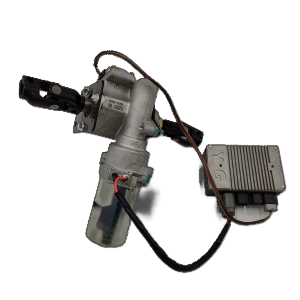
How EPS Works — Simplified
EPS uses sensors, an electronic control unit (ECU), and an electric motor to provide steering assist. Here is the step-by-step flow when you turn the steering wheel:
- You turn the wheel — mechanical force travels down the steering column
- Torque sensor measures how hard you are turning
- Speed sensor tells the ECU how fast the vehicle is moving
- ECU calculates the precise amount of assist needed (more at low speed, less at high speed)
- Electric motor activates and applies assist torque to the column or rack
- You steer with ease — the motor does the heavy work
The key advantage: the system only consumes power when assisting, unlike hydraulic systems that run constantly.
Key Components of an EPS System
| Component | Function | EV Conversion Note |
|---|---|---|
| Torque Sensor | Measures steering input force | Integrated in the EPS column assembly |
| Vehicle Speed Sensor | Provides speed data for variable assist | Can use EV's existing speed signal or add a sensor |
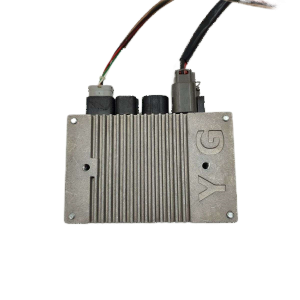
| ECU (Controller) | Processes sensor data and drives the motor | CMVTE EPS kits include a matched controller |
| Electric Motor | Provides the assist torque | 180W / 220W / 360W options available |
| Mechanical Linkage | Maintains physical connection to wheels | Manual steering remains if EPS fails (backup safety) |
EPS vs Hydraulic: Why EV Builders Choose EPS
| Factor | EPS (Electric) | Hydraulic (HPS) |
|---|---|---|
| Power Source | 12V battery / DC-DC converter | Belt-driven pump from engine |
| Energy Usage | Only when steering | Continuous parasitic loss |
| Maintenance | None (no fluid, no pump) | Fluid changes, hose leaks, pump wear |
| Installation | Simple wiring + column mount | Fluid lines, pump mounting, belt alignment |
| Weight | Lightweight (motor + ECU) | Heavy (pump + reservoir + fluid) |
| Tunability | Programmable assist curve | Fixed mechanical assist ratio |
CMVTE EPS Kits Comparison
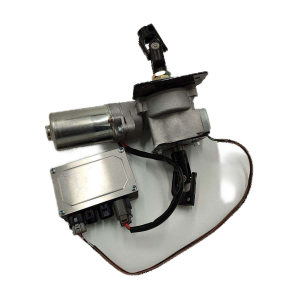
CMVTE offers three EPS power levels for EV conversions. All run on 12V and include the motor, controller, and wiring harness.
| Model | Power | Voltage | Vehicle Weight Range | Best For |
|---|---|---|---|---|
| EPS 180W | 180W | 12V | Under 800 kg (light cars, Kei cars, ATVs) | Small classic cars, golf carts, light buggies |
| EPS 220W | 220W | 12V | 800–1200 kg (compact cars) | VW Beetle, Fiat 500, Mini, classic sedans |
| EPS 360W | 360W | 12V | 1200–2000 kg (mid-size cars, vans, pickups) | VW T2/T3, classic pickups, SUVs, light trucks |
Which EPS Power Level for Your Vehicle?
Choosing the right EPS kit depends primarily on your vehicle's front axle weight (not total weight):
- 180W — Front axle < 400 kg. Suitable for: Suzuki Alto, classic Mini, golf cart conversions
- 220W — Front axle 400–600 kg. Suitable for: VW Beetle, Fiat 500, Mazda MX-5 / Miata
- 360W — Front axle 600–1000 kg. Suitable for: VW T2, classic pickup trucks, SUVs
If unsure, choose the next size up. The current draw is low enough that oversizing has minimal impact on range.
EPS Installation Tips for EV Conversions
- Power supply: Connect the EPS controller to your 12V auxiliary battery. Ensure your DC-DC converter can handle the peak current (360W = ~30A peak).
- Column integration: CMVTE EPS kits are designed as column-assist units. You will replace or supplement the original steering column with the EPS unit.
- Speed signal: For variable assist (lighter at low speed, firmer at high speed), feed a vehicle speed signal to the EPS controller. Most EV motor controllers output this via CAN or wire.
- Mounting: Secure the EPS motor bracket to a solid firewall or sub-frame member. Use rubber grommets to reduce vibration.
- Fusing: Always install a 30–40A inline fuse on the power wire close to the battery.
FAQ
Can I add EPS to a classic car that originally had manual steering?
Yes. That is one of the most common uses. CMVTE EPS kits can be retrofitted to any vehicle with a standard steering column. The electric motor provides the assist that the original manual system lacked.
Does EPS drain my EV battery significantly?
No. EPS only draws power when you are actively turning the wheel. Average consumption is negligible compared to the traction motor. A 360W peak draw at 12V is ~30A, but only for brief moments during parking maneuvers.
Can I use EPS with a Tesla drive unit or other high-voltage system?
Yes. EPS runs on 12V, independent of your high-voltage traction system. As long as you have a DC-DC converter powering the 12V system, EPS is fully compatible with any EV drivetrain.
What happens if the EPS fails while driving?
The mechanical linkage remains intact. You will still be able to steer manually — it will just be heavier (the same as a non-assisted vehicle). This is a key safety feature of column-assist EPS systems.
Do I need to modify my steering column?
CMVTE EPS kits are designed to integrate with existing columns. Some cutting and welding may be required depending on your specific vehicle, but the kit includes mounting brackets and detailed instructions.
Find the Right EPS Kit for Your Build
Browse the full CMVTE EPS/EHPS collection to choose the right power steering kit for your EV conversion.
Not sure which EPS power level fits your vehicle? Tell us your vehicle model, curb weight, and front axle weight — we will recommend the right kit.
Related guides:

