

The Hidden Spec That Decides Torque, Range and Noise
Peak kilowatts sell motors. But the numbers you almost never see on a spec sheet — pole pairs and stator slot counts — quietly decide how your conversion accelerates, how far it travels, and how it sounds. Get the combination wrong and no amount of controller tuning will fix it. Get it right and your car drives like a factory EV.
Yet this is exactly the spec most suppliers never mention. This guide explains pole pairs and slots in plain English, compares every common combination, and shows why buying factory-direct means getting the right "DNA" from day one.
Pole Pairs and Slots in Plain English
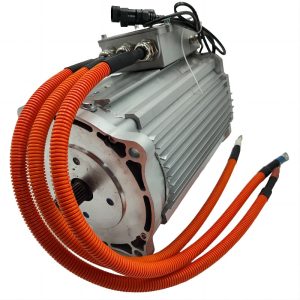
Every motor rotor carries magnetic poles (north and south). Pole pairs (p) is half the pole count — a "4-pole" motor has two pole pairs. The stator carries slots (z) that hold the copper windings. The way the slots line up with the poles is the motor's slot-pole combination.
Two numbers define any combination: the greatest common divisor gcd(z,p) and the slot-pole ratio. The simple rule: the lower the gcd, the cleaner the magnetic field — which means less cogging, less noise, and smoother low-speed control. More poles means more torque in a smaller frame, at the cost of higher iron loss and hotter operation.
Why It Matters More in an EV Than Anywhere Else
A fan or a pump runs at one speed forever. Your EV conversion does everything at once:
- Low-speed torque. More poles equals higher torque density at low RPM — exactly where EVs work hardest. In the same frame, an 8-pole motor pulls harder off the line and up hills than a 4-pole.
- Range. Fractional-slot concentrated windings (12-slot 8-pole, 18-slot 12-pole) have short coil ends that cut copper loss by 10-25% — directly more kilometres per charge.
- Noise. The engine is gone, so the motor is the loudest thing in the car. A clean slot-pole combination suppresses the electromagnetic whine that makes cheap conversions sound like a dentist's drill.
- Smoothness. A low gcd means low cogging torque — no judder when parking, reversing a trailer, or creeping through gates.

The 5 Slot-Pole Combinations Every EV Builder Should Know
Here is how the common combinations perform, based on real motor engineering data:
| Combination | Winding Type | EV Verdict |
|---|---|---|
| 6-slot 4-pole | Integral-slot | ❌ Cheap, high cogging, poor low-speed control — avoid |
| 12-slot 6-pole | Integral distributed | ⚠️ Low iron loss but high copper loss, low power density |
| 12-slot 8-pole | Fractional concentrated | ✅ Mainstream EV choice — low cogging, high power density, mass-producible |
| 18-slot 12-pole | Fractional concentrated | ✅✅ Quietest, lowest cogging — ideal for passenger cars |
| 24-slot 16-pole | High slot-pole | ✅ High power density and high-speed capability, higher cost |
Notice the pattern: the EV winners are fractional-slot concentrated combinations with a high gcd. They pack more copper into short end turns, keep cogging low, and — crucially — can be wound by automated machines, which keeps mass-production cost down so you save money.
Why Factory-Direct Means the Right DNA in Your Motor
Here is the part no spec sheet will tell you: the slot-pole combination is decided at the factory, by the factory, and you cannot change it after purchase. When you order a CMVTE PMSM motor, that decision is made for EV traction — not for a fan or a pump.
Every CMVTE motor uses fractional-slot concentrated windings for low cogging, an optimized pole arc and a skewed stator for quiet running, and ships with a pre-programmed FOC controller tuned to the exact slot-pole combination. Every unit is dynamometer-tested, and we will share the winding and test data with you before you order.
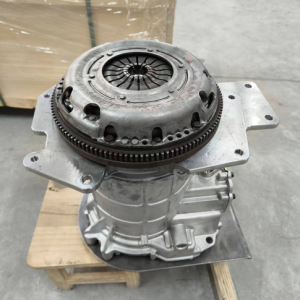
A US Parts Retailer Kit, by contrast, is often a generic marketplace motor bought by part number — not by design. You get an unknown slot-pole combination and a typical 40-60% retail markup. Buying direct from the manufacturer puts that margin back in your pocket, and we ship worldwide to 130+ countries by air or sea with full customs documentation.
Ask These 4 Questions Before You Buy Any Motor
- What is the slot-pole combination — and its gcd?
- Is it fractional-slot concentrated, or integral-slot distributed?
- Is the stator skewed to suppress cogging?
- Can I see the dynamometer test report?
Most generic suppliers cannot answer all four. CMVTE can — because we design and build the motors ourselves.
Tell Us Your Vehicle — We'll Match the Right Motor DNA
Don't gamble your build on a datasheet. Send your vehicle, weight, and how you drive it — we will recommend a motor whose slot-pole design matches your torque, range, and noise requirements. Ask for the winding and test data before you buy.
Not sure which motor fits your build? Send your vehicle details and we will recommend a matched motor + controller within 24 hours.
Related guides:


