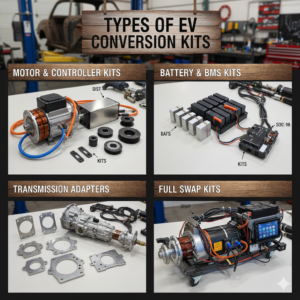
Is it cheaper to convert your existing car to electric, or just buy a factory EV? The answer depends on your car, your budget, and how long you plan to keep it. Here's the real math — with actual CMVTE kit prices and real-world operating costs.
Upfront Cost: Conversion Kit vs New EV
| Option | Price Range (USD) | Notes |
|---|---|---|
| Buy a new EV (e.g., Nissan Leaf, Chevy Bolt) | $28,000 - $45,000 | Full warranty, modern features, 0 miles |
| Buy a used EV (3-5 years old) | $15,000 - $25,000 | Range may be reduced; battery health unknown |
| CMVTE DIY Conversion (10-15 kW kit) | $4,000 - $7,000 | Budget build, city driving, 80-120 km range |
| CMVTE DIY Conversion (25-30 kW kit) | $8,000 - $14,000 | Daily driver, highway-capable, 120-180 km range |
| CMVTE DIY Conversion (40-60 kW kit) | $15,000 - $25,000 | Performance build, towing, 180-250 km range |
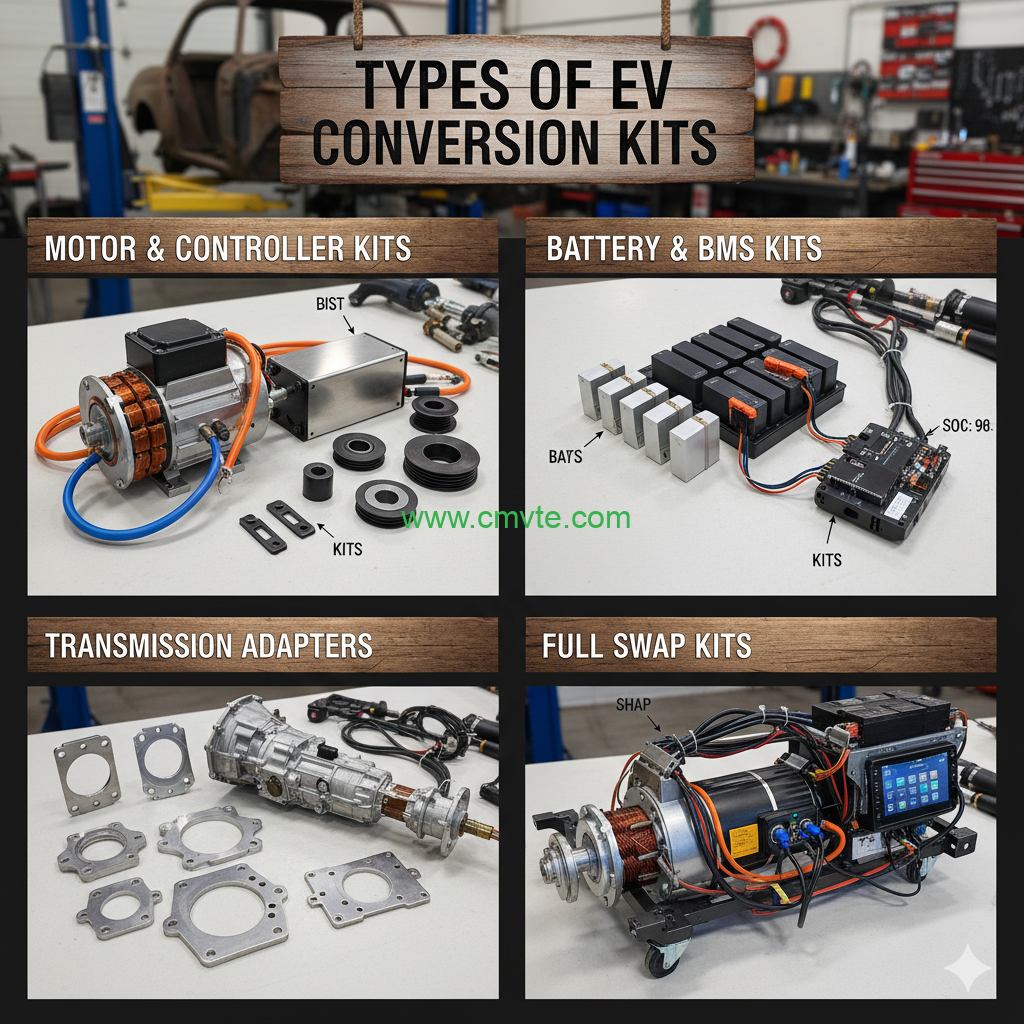
Conversion prices include motor, controller, battery pack, charger, DC-DC, wiring, and cooling. Exclude donor vehicle and labor.
5-Year Cost Comparison: Conversion vs New EV
| Cost Factor | New EV ($35k avg) | Used EV ($20k) | CMVTE Conversion on Paid-off Car ($12k kit) |
|---|---|---|---|
| Initial purchase | $35,000 | $20,000 | $12,000 (kit) + $0 (you already own the car) |
| Annual fuel/electricity (20,000 km) | $600 | $600 | $600 |
| Annual maintenance | $300 | $400 | $200 (no engine oil, belts, or smog checks) |
| Insurance (annual) | $1,200 | $1,000 | $600 (older car, lower value) |
| Depreciation (5 years) | -$17,500 | -$7,000 | -$3,000 (converted classic/older car holds value) |
| Total 5-Year Cost | $48,500 | $26,000 | $18,600 |
| Monthly Cost | $808 | $433 | $310 |
These numbers assume you already own a suitable donor vehicle. If you buy a used car specifically to convert, add $3,000-$8,000 for the donor — your total is still well under a used EV.
Where the Savings Come From
- No car payment — you keep the vehicle you already own
- No oil changes — electric motors have no engine oil, filters, or spark plugs
- No smog checks — zero emissions means no emissions testing in most jurisdictions
- Lower insurance — classic/older vehicles cost less to insure than a new $35k+ EV
- Less depreciation — a well-converted classic car often appreciates; a new EV loses 50% in 5 years
- Fuel savings — $0.03-0.05/km vs $0.12-0.18/km for gas
When Buying Makes More Sense
A new EV is the better choice if:
- You don't have a suitable donor vehicle
- You need 400+ km range (most conversions get 100-250 km)
- You want modern safety features (ADAS, airbags, crumple zones)
- You need a warranty and dealer service network
- You don't have time or interest in a DIY project
When Converting Makes More Sense
- You own a classic, vintage, or sentimental vehicle
- Your current car is paid off and mechanically sound
- You drive 30-150 km per day (well within conversion range)
- You enjoy working on cars or have a mechanic you trust
- You want lower insurance and registration costs
Real-World Breakeven Example
Scenario: You own a 2010 Toyota Tacoma (paid off). You convert it with a CMVTE 25 kW kit ($10,000 including battery). Your daily commute is 60 km, saving you $200/month in gas vs your previous 18 L/100 km fuel bill.
Breakeven: $10,000 ÷ $200/month = 50 months (~4 years). After that, you're driving for essentially zero fuel cost. The truck itself has another 10+ years of life.
Calculate Your Own Payback
We'll help you spec a kit that matches your driving distance and budget. Send us your vehicle, daily km, and current fuel cost — we'll send back a complete kit price and estimated payback period.
WhatsApp / Phone: +86 181 2358 8272
Email: [email protected]
Mention "Cost Calc" in your message.